With the impending snow forcasted for our area this week, we thought that we would share some of our favorite tips and suggestions to beat the winter blues with the cabin fever you might be experiencing shortly, if not already after last week's storms!
How did your child do in the first half of the school year? Were you pleased with his or her performance, or do you think there is room for improvement? No matter what letters appeared on your child’s report card, January is the perfect time to help him or her get excited about going back to school and learning.
This can be accomplished by creating an atmosphere in your home that encourages learning. Sylvan Learning offers a few tips concerning how to get involved with your child’s learning process and help motivate him or her in the new year.
• Have family reading time at least once a week. Utilize Book Adventure, a free Sylvan-created interactive, reading motivation program that can be found on Book Adventure. Students choose their own books from more than 7,500 titles, take short comprehension quizzes and redeem their accumulated points for small prizes. Book Adventure also offers teacher and parent resources and tips to help children develop a lifelong love of reading. A snowy day is a great time to set this up together and begin earning points.
• Set aside a specific time for homework and studying. Take advantage of this quiet time to sit with your child and work on your paperwork. This visually demonstrates the importance of “work time” to your child.
• If homework was a struggle during the first semester, set up a reward system for this semester. For example, deposit change in a small jar when homework is complete. As soon as the jar is full, treat the whole family to something everyone will enjoy.
• Refresh your child’s “study space.” Make sure that all materials, such as pencil sharpeners, erasers and extra paper are easily accessible and in adequate supply. When something is new and exciting, kids will want to use it. As one of our students recently commented after starting in our Study Skills program, he went out and bought a new agenda book because he knew he would be so excited about it he would actually use it.
• Create study plans. Have your child do his most challenging assignment first, while he is most focused, then have him work on easier tasks. Finish each homework session with a fun activity.
• Search the Internet with your child to learn more about topics being covered in school. Try TeacherTube (kind of like YouTube but more kid-friendly) for videos on different items from Social Studies or freerice.org to learn new vocabulary.
• Invite your child to participate in cooking or shopping to strengthen his or her math skills.
• Encourage your child to choose a classmate with whom he can study and swap reading books. On Amazon.com, you can download an app for your home computer or smartphone to read Kindle books, many of which you can also download for free from Project Gutenburg or other free sources.
• Get your child organized inside and outside of school. By being organized, your child will have plenty of time to complete all assignments, and she will also learn the value of time management.
• Talk to your child’s teachers. The second half of the year can be more challenging than the first. Find out if your child needs extra help in a specific subject in order to keep up with the class.
For more educational resources for children in grades pre-K through 12, please visit www.SylvanLearning.com or call your nearest center.
Clinton, NJ 908-638-6788
Hamilton, NJ 609-588-9037
Flemington, NJ 908-806-4010
Sylvan Learning Directors and teachers from Flemington, New Jersey dish on the latest educational trends and what you can do to help your child achieve academic success!

Monday, January 24, 2011


Tuesday, January 18, 2011
Does TV Inhibit Reading?
According to the latest Neilsen survey, the average 11-year-old watches more than 28 hours of television a week; the average 5-year-old - 32 hours a week. And, new research suggests that all those hours may have an impact on their vocabulary.
Like most children, Zachary and his little sister, Brooklyn, like to watch television. “Usually I watch Nickelodeon, Disney Channel, Animal Planet,” says Zachary. Brooklyn’s favorite show is “Sponge Bob.”
The children’s parents try to set limits – usually an hour of television a day, sometimes more on the weekends. “I do think too much is not good because you are just kind of brain dead when you are watching TV. A little of the right thing can actually be okay,” says Lisa Busman, Zachary and Brooklyn’s mother.
A University of Washington study finds that the more TV that a baby watches, the smaller his or her vocabulary. In fact, for every hour of TV, a child learns six to eight fewer words compared to babies who never watch TV at all.
Psychiatrist Dr. Suzanne Starkey explains, “Television just presents material. It doesn’t question it. It’s the questioning and the
understanding that the kids really need.” She says the same rules apply to videos that claim to be educational. To learn, babies require face-to-face interaction. “When we’re learning about language, the back and forth interaction between mother and child is very important. That’s where the child will learn sounds, and that’s where the child will learn some degree of inflection.”
Experts say instead of passive activities, children of all ages are better served by being active – playing, learning an instrument, spending time with family, and, of course, reading, which is exactly what Brooklyn and Zachary love to do.
Nearly 40 years ago, a critic dubbed television a “vast wasteland.” The American Academy of Pediatrics (AAP) is weighing in with its own opinion. AAP officials released statements that say television can have negative long-term effects, such as weight problems and lack of creativity, on children.
Nancy Beyer has pulled the cable at home and bans all television on weekends for her 12-year-old daughter. “It makes me use my imagination more than lots of kids do,” says Beyer’s daughter, Jessica.
Although Jessica’s mother hopes that the television ban will nudge her daughter to become more sociable, Jessica admits at times the opposite is true. She says she feels excluded at school when other kids are discussing what shows were on and she has to remind them that “we don’t have cable.”
Some experts say that by dismissing television, parents may miss some key teaching opportunities with their kids. Dr. Vincent Ho, a psychiatrist, says that parents should not let the television become a passive experience but should use it to stimulate discussion. He suggests that even “bad” television can be a good learning tool and that many opportunities to discuss what is going on exist.
Tips for Parents
A study completed by the Annenberg Public Policy Center found that 57% of parents with preschool children believe that television has done more good than harm. However, the opinions were different among parents with children aged 6 to 11. Their opinions were primarily based on the belief that a lack of quality programs for older children exists. Based on its study, the AAP makes two major recommendations for children and television viewing:
* Children under two years old should not watch television. Children under two need to receive stimuli from interaction with older people for proper brain development.
* Older children should not have television sets in their bedrooms. By
keeping televisions in common areas of the house, you are better able to monitor your child’s viewing.
While watching television can jumpstart discussions with your child, it is important that you encourage your child in other active and educational endeavors. The Medical College of Wisconsin offers the following advice for limiting your child’s television and other media intake:
* Ask your child to tell you what his or her favorite shows are and together predetermine which ones he or she will watch on a regular basis.
* Set limits to time spent on the computer when not engaged in schoolwork. More than one to two hours per day is excessive.
* Help your child to structure the rest of his or her time by looking for opportunities in the community, such as after-school sports, school-based clubs, scouting and school or community artistic endeavors (band, orchestra, etc.).
* Make frequent trips to the library and help your child choose age-appropriate books to read.
* Play games or sports with your child.
* Last, but not least, set a good example by limiting your own television time.
Like most children, Zachary and his little sister, Brooklyn, like to watch television. “Usually I watch Nickelodeon, Disney Channel, Animal Planet,” says Zachary. Brooklyn’s favorite show is “Sponge Bob.”
The children’s parents try to set limits – usually an hour of television a day, sometimes more on the weekends. “I do think too much is not good because you are just kind of brain dead when you are watching TV. A little of the right thing can actually be okay,” says Lisa Busman, Zachary and Brooklyn’s mother.
A University of Washington study finds that the more TV that a baby watches, the smaller his or her vocabulary. In fact, for every hour of TV, a child learns six to eight fewer words compared to babies who never watch TV at all.
Psychiatrist Dr. Suzanne Starkey explains, “Television just presents material. It doesn’t question it. It’s the questioning and the
understanding that the kids really need.” She says the same rules apply to videos that claim to be educational. To learn, babies require face-to-face interaction. “When we’re learning about language, the back and forth interaction between mother and child is very important. That’s where the child will learn sounds, and that’s where the child will learn some degree of inflection.”
Experts say instead of passive activities, children of all ages are better served by being active – playing, learning an instrument, spending time with family, and, of course, reading, which is exactly what Brooklyn and Zachary love to do.
Nearly 40 years ago, a critic dubbed television a “vast wasteland.” The American Academy of Pediatrics (AAP) is weighing in with its own opinion. AAP officials released statements that say television can have negative long-term effects, such as weight problems and lack of creativity, on children.
Nancy Beyer has pulled the cable at home and bans all television on weekends for her 12-year-old daughter. “It makes me use my imagination more than lots of kids do,” says Beyer’s daughter, Jessica.
Although Jessica’s mother hopes that the television ban will nudge her daughter to become more sociable, Jessica admits at times the opposite is true. She says she feels excluded at school when other kids are discussing what shows were on and she has to remind them that “we don’t have cable.”
Some experts say that by dismissing television, parents may miss some key teaching opportunities with their kids. Dr. Vincent Ho, a psychiatrist, says that parents should not let the television become a passive experience but should use it to stimulate discussion. He suggests that even “bad” television can be a good learning tool and that many opportunities to discuss what is going on exist.
Tips for Parents
A study completed by the Annenberg Public Policy Center found that 57% of parents with preschool children believe that television has done more good than harm. However, the opinions were different among parents with children aged 6 to 11. Their opinions were primarily based on the belief that a lack of quality programs for older children exists. Based on its study, the AAP makes two major recommendations for children and television viewing:
* Children under two years old should not watch television. Children under two need to receive stimuli from interaction with older people for proper brain development.
* Older children should not have television sets in their bedrooms. By
keeping televisions in common areas of the house, you are better able to monitor your child’s viewing.
While watching television can jumpstart discussions with your child, it is important that you encourage your child in other active and educational endeavors. The Medical College of Wisconsin offers the following advice for limiting your child’s television and other media intake:
* Ask your child to tell you what his or her favorite shows are and together predetermine which ones he or she will watch on a regular basis.
* Set limits to time spent on the computer when not engaged in schoolwork. More than one to two hours per day is excessive.
* Help your child to structure the rest of his or her time by looking for opportunities in the community, such as after-school sports, school-based clubs, scouting and school or community artistic endeavors (band, orchestra, etc.).
* Make frequent trips to the library and help your child choose age-appropriate books to read.
* Play games or sports with your child.
* Last, but not least, set a good example by limiting your own television time.
Monday, January 10, 2011
Over-Technology, Over-Tasked
An Associated Press/MTV poll of college students finds that being connected by technology 24/7 comes at a cost. While 57 percent of students surveyed said life would be more stressful without computers and cell phones, 25 percent said living without it would be a relief.
When it comes to multi-tasking, how much do students remember from
their studies when they’re also texting, checking emails and listening to their iPod? For some -- not a whole lot.
For teenagers, there’s a lot going on after school: e-mails, texting, blogs, television, iPods and talking on the phone...all while they’re trying to do their homework. The question is: does multi-tasking really
work, or are teens fooling themselves?
Some kids apparently can’t just sit down and focus on their homework at the
exclusion of everything else. “Well, I’m writing an essay about the American and French revolutions,” says 15-year-old Luke while sitting at his computer, “and I’m checking my e-mail and my Myspace [account] at the same time - and listening to my music.”
And while some kids, like Luke, say they can handle all these things at once, experts disagree. “Studies have shown that, when the children are watching TV while doing their homework, and they pick up their heads to watch a part of the program, they lose their focus on their homework and they start paying more attention to the television set,” says Bonnie Cohen-
Greenberg, who works with students with learning disabilities. And, she says, losing focus means kids won’t remember what they’ve studied.
“Well, the problem is, if you’re not really paying attention to something, you’re not really learning it,” she says. “So it’s not going to stay in your long-term memory. Many times, children can describe what
they see on TV while they’re doing their homework much easier than they can
describe the type of homework assignment they had - because the TV show is a lot more engaging to them.”
In fact, many kids get so absorbed in e-mails, texting, the Internet, and video games, they end up procrastinating on
their schoolwork. That’s often the case for 16-year-old Myles.
“I think, well, I’m going to do it later, after I get off the computer,” he admits, “but after I’m done with everything I’m so tired. So I end up going to sleep and I forget my homework. So I have to rush and do it in the morning, before class starts.”
Experts say that even young children should develop study habits that focus their attention. Set a goal, complete it and take a break. Why? Because schoolwork is their most important job.
“Realize that homework is a priority,” says Cohen-Greenberg, “and when they are doing their homework, to only do their homework. They can certainly have breaks. And when they have breaks, take a quick break - relax, do something fun - and then get right back to it.”
What We Need To Know
Many people, both teens and adults, think that multitasking is the best way
to accomplish a lot in a small amount of time. But scientific evidence says this isn’t true. Research conducted by David E. Meyer, director of the Brain, Cognition, and Action Laboratory at the University of Michigan, found that when people try to perform two or more related tasks, either at the same time or quickly switching back and forth between them, they do a worse job on both of them. Multitasking causes a kind of brownout in the brain -- there just isn’t enough power to go around.
Meyer says it can take up to 400 percent longer to do a homework assignment if you’re trying to do something else, like texting at the same time. The brain cannot process two different complex things at the same time. What your brain does instead is prioritize tasks. So if you’re listening to music and reading a book, your brain will concentrate on the music, and when that’s finished, it will focus on taking in the information from the book. The result is that neither task is done
efficiently.
WikiHow offers these tips to help control multitasking:
• Set up separate to-do lists for different tasks. Help your student create a to-do list to organize assignments and responsibilities by class and extracurricular activity.
• Identify the most important tasks (such as a paper that is due tomorrow) and work on that most important task first. Don’t do anything else until this is done.
• Turn off all other distractions. Shut off e-mail, the Internet if possible, turn off the TV, your iPod and your cell phone. Focus on that one task, and try to get it done without worrying about other stuff.
• If you feel the urge to check your email or switch to another task, stop yourself. Breathe deeply. Re-focus yourself. Get back to the task at hand.
• Take deep breaths, stretch, and take breaks now and then. Enjoy life. Go outside, and appreciate nature. Keep yourself sane.
Reposted from Connectwithkids.com
For additional information and educational videos, visit
www.ConnectWithKids.com
When it comes to multi-tasking, how much do students remember from
their studies when they’re also texting, checking emails and listening to their iPod? For some -- not a whole lot.
For teenagers, there’s a lot going on after school: e-mails, texting, blogs, television, iPods and talking on the phone...all while they’re trying to do their homework. The question is: does multi-tasking really
work, or are teens fooling themselves?
Some kids apparently can’t just sit down and focus on their homework at the
exclusion of everything else. “Well, I’m writing an essay about the American and French revolutions,” says 15-year-old Luke while sitting at his computer, “and I’m checking my e-mail and my Myspace [account] at the same time - and listening to my music.”
And while some kids, like Luke, say they can handle all these things at once, experts disagree. “Studies have shown that, when the children are watching TV while doing their homework, and they pick up their heads to watch a part of the program, they lose their focus on their homework and they start paying more attention to the television set,” says Bonnie Cohen-
Greenberg, who works with students with learning disabilities. And, she says, losing focus means kids won’t remember what they’ve studied.
“Well, the problem is, if you’re not really paying attention to something, you’re not really learning it,” she says. “So it’s not going to stay in your long-term memory. Many times, children can describe what
they see on TV while they’re doing their homework much easier than they can
describe the type of homework assignment they had - because the TV show is a lot more engaging to them.”
In fact, many kids get so absorbed in e-mails, texting, the Internet, and video games, they end up procrastinating on
their schoolwork. That’s often the case for 16-year-old Myles.
“I think, well, I’m going to do it later, after I get off the computer,” he admits, “but after I’m done with everything I’m so tired. So I end up going to sleep and I forget my homework. So I have to rush and do it in the morning, before class starts.”
Experts say that even young children should develop study habits that focus their attention. Set a goal, complete it and take a break. Why? Because schoolwork is their most important job.
“Realize that homework is a priority,” says Cohen-Greenberg, “and when they are doing their homework, to only do their homework. They can certainly have breaks. And when they have breaks, take a quick break - relax, do something fun - and then get right back to it.”
What We Need To Know
Many people, both teens and adults, think that multitasking is the best way
to accomplish a lot in a small amount of time. But scientific evidence says this isn’t true. Research conducted by David E. Meyer, director of the Brain, Cognition, and Action Laboratory at the University of Michigan, found that when people try to perform two or more related tasks, either at the same time or quickly switching back and forth between them, they do a worse job on both of them. Multitasking causes a kind of brownout in the brain -- there just isn’t enough power to go around.
Meyer says it can take up to 400 percent longer to do a homework assignment if you’re trying to do something else, like texting at the same time. The brain cannot process two different complex things at the same time. What your brain does instead is prioritize tasks. So if you’re listening to music and reading a book, your brain will concentrate on the music, and when that’s finished, it will focus on taking in the information from the book. The result is that neither task is done
efficiently.
WikiHow offers these tips to help control multitasking:
• Set up separate to-do lists for different tasks. Help your student create a to-do list to organize assignments and responsibilities by class and extracurricular activity.
• Identify the most important tasks (such as a paper that is due tomorrow) and work on that most important task first. Don’t do anything else until this is done.
• Turn off all other distractions. Shut off e-mail, the Internet if possible, turn off the TV, your iPod and your cell phone. Focus on that one task, and try to get it done without worrying about other stuff.
• If you feel the urge to check your email or switch to another task, stop yourself. Breathe deeply. Re-focus yourself. Get back to the task at hand.
• Take deep breaths, stretch, and take breaks now and then. Enjoy life. Go outside, and appreciate nature. Keep yourself sane.
Reposted from Connectwithkids.com
For additional information and educational videos, visit
www.ConnectWithKids.com
Wednesday, January 5, 2011
Good Attendance Matters
The holidays are over. It’s a New Year, and a time for renewed academic resolutions.
Here’s a goal that many students will find compelling and achievable this year: Good Attendance.
While academic goals take a while to show results—students organize, study, break down big tasks into smaller ones, and wait for grades and report cards to appear—maintaining a good attendance record is more immediate. It’s easily understood. Each day is a small achievement.
Good attendance is not an empty achievement, either. There’s a strong correlation between attendance and achievement, behavior, post-secondary schooling, and drop-out rates. There’s plenty of research, and our common sense backs it up. Good attendance numbers also tell us something about the school and the instruction that’s going on there.
Here are some ways to motivate students to keep attendance up.
Show you care. Good attendance is important to you as a parent. Show that you don’t approve of lateness, fake illnesses, or dodging responsibilities. Have high expectations. Your child should bereally sick before missing school. High fever? Okay. Lethargy? Unprepared? Not so much.
Communicate with the school. When your child must be absent, call or e-mail the school to tell them. Let your child see you do this. Now the school will know that they can expect to hear from you in the future, and your child will know that adults are monitoring his health and academics.
Schedule when you can. Help your child keep up her good attendance record by making routine pediatrician, optometrist, and dentist appointments for days when school is not in session. This won’t always be possible, but your child will see that you’re serious about school attendance when you try.
Have back-up plans. Snow? Car trouble? Alarm not working? Have back-up plans, so your kid doesn’t get the idea that any disruption is a convenient excuse for taking a day off. If you want a good laugh, ask a teacher for some of his or her favorite absence excuses. You won’t believe what you hear.
Don’t be an accomplice. Don’t allow your child to talk you into making excuses for him. Follow your instincts. Your job is to teach him responsibility and self-discipline. His job is to go to school. Don’t upset this balance of power.
Show why good work habits are important. Good attendance is a good habit. Help your child by establishing helpful routines, having a study area, monitoring her homework, keeping her on schedule for important school projects, and celebrating success. Show how you maintain good work habits to be successful in your job or other important activities.
Watch confidence rise. Good attendance isn’t the only criterion for success, but its part of a wide range of characteristics of highly-achieving students. Watch your child’s confidence rise as he sees more success, starting with the perseverance needed for good attendance.
Don’t give up. Like so many other child-rearing goals, staying positive is key. Let your kid know that his health is paramount, but his academic achievement isn’t far behind. Absences from school are going to get your strictest attention.
Here’s a goal that many students will find compelling and achievable this year: Good Attendance.
While academic goals take a while to show results—students organize, study, break down big tasks into smaller ones, and wait for grades and report cards to appear—maintaining a good attendance record is more immediate. It’s easily understood. Each day is a small achievement.
Good attendance is not an empty achievement, either. There’s a strong correlation between attendance and achievement, behavior, post-secondary schooling, and drop-out rates. There’s plenty of research, and our common sense backs it up. Good attendance numbers also tell us something about the school and the instruction that’s going on there.
Here are some ways to motivate students to keep attendance up.
Show you care. Good attendance is important to you as a parent. Show that you don’t approve of lateness, fake illnesses, or dodging responsibilities. Have high expectations. Your child should bereally sick before missing school. High fever? Okay. Lethargy? Unprepared? Not so much.
Communicate with the school. When your child must be absent, call or e-mail the school to tell them. Let your child see you do this. Now the school will know that they can expect to hear from you in the future, and your child will know that adults are monitoring his health and academics.
Schedule when you can. Help your child keep up her good attendance record by making routine pediatrician, optometrist, and dentist appointments for days when school is not in session. This won’t always be possible, but your child will see that you’re serious about school attendance when you try.
Have back-up plans. Snow? Car trouble? Alarm not working? Have back-up plans, so your kid doesn’t get the idea that any disruption is a convenient excuse for taking a day off. If you want a good laugh, ask a teacher for some of his or her favorite absence excuses. You won’t believe what you hear.
Don’t be an accomplice. Don’t allow your child to talk you into making excuses for him. Follow your instincts. Your job is to teach him responsibility and self-discipline. His job is to go to school. Don’t upset this balance of power.
Show why good work habits are important. Good attendance is a good habit. Help your child by establishing helpful routines, having a study area, monitoring her homework, keeping her on schedule for important school projects, and celebrating success. Show how you maintain good work habits to be successful in your job or other important activities.
Watch confidence rise. Good attendance isn’t the only criterion for success, but its part of a wide range of characteristics of highly-achieving students. Watch your child’s confidence rise as he sees more success, starting with the perseverance needed for good attendance.
Don’t give up. Like so many other child-rearing goals, staying positive is key. Let your kid know that his health is paramount, but his academic achievement isn’t far behind. Absences from school are going to get your strictest attention.
Thursday, December 16, 2010
Sylvan Learning Center Sponsors Donation Drive Benefitting Local Animal Shelter
The Clinton and Flemington Sylvan Learning, the leading provider of tutoring to students of all ages, grades and skill levels, has been collecting donations for Common Sense for Animals, a no-kill shelter in Broadway, New Jersey since November. Sylvan Learning offers a variety of educational programs and personalized learning plans that help children reach their full potential and help families reach their academic goals, but the Directors have also encouraged students to reach beyond the classroom.
With the help of the parents and students at Sylvan as well as Sylvan teachers and friends, Directors Stefanie Hickman, Lisa Hubright, Lauren Baker and Erin Merritt collected nearly 200 pounds of dog and cat food, nearly a 100 rolls of paper towels, plus multiple cleaners and treats for the animals. “We are so thankful to everyone who has helped to make this so successful. It is our hope that our students can take away from this drive the spirit of giving at this time of year in addition to the supplemental education that we are already providing for them,” says Stefanie of the Clinton Center.
The donations collected at both centers were delivered to Common Sense for Animals on December 16, 2010 using a pick-up truck. Common Sense for Animals was chosen by directors for its mission “to promote animal welfare through education and community service. [They] strive to educate all people, particularly children, as to what constitutes proper care and the importance of protecting our environment, wildlife, habitat and endangered species.” For more information about Common Sense for Animals, to donate or to adopt please visit www.commonsenseforanimals.org.
Stefanie Hickman, Center Director of the Clinton Sylvan Learning, explains, “Our goal is to assist local students in developing the skills, habits and attitudes needed for lifelong success. Only Sylvan offers a proven process that sets us apart from tutors and other educational services. At our centers, we aim to aid students in developing these skills but also to be a role model for community service.”

Outside the Shelter
 Common Sense for Animals
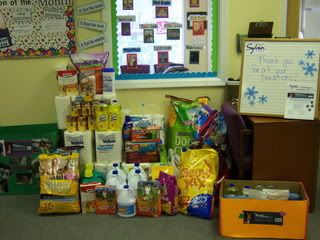
The Donations we brought

One of the Kitties playing with a toy that we brought
With the help of the parents and students at Sylvan as well as Sylvan teachers and friends, Directors Stefanie Hickman, Lisa Hubright, Lauren Baker and Erin Merritt collected nearly 200 pounds of dog and cat food, nearly a 100 rolls of paper towels, plus multiple cleaners and treats for the animals. “We are so thankful to everyone who has helped to make this so successful. It is our hope that our students can take away from this drive the spirit of giving at this time of year in addition to the supplemental education that we are already providing for them,” says Stefanie of the Clinton Center.
The donations collected at both centers were delivered to Common Sense for Animals on December 16, 2010 using a pick-up truck. Common Sense for Animals was chosen by directors for its mission “to promote animal welfare through education and community service. [They] strive to educate all people, particularly children, as to what constitutes proper care and the importance of protecting our environment, wildlife, habitat and endangered species.” For more information about Common Sense for Animals, to donate or to adopt please visit www.commonsenseforanimals.org.
Stefanie Hickman, Center Director of the Clinton Sylvan Learning, explains, “Our goal is to assist local students in developing the skills, habits and attitudes needed for lifelong success. Only Sylvan offers a proven process that sets us apart from tutors and other educational services. At our centers, we aim to aid students in developing these skills but also to be a role model for community service.”

Outside the Shelter
 Common Sense for Animals
The Donations we brought

One of the Kitties playing with a toy that we brought
Tuesday, December 14, 2010
Regular Practice Creates Better Writers
With winter break just around the corner, children are enjoying the cold weather, the fun activities with friends and family and some vacation time. But winter break can also be an enjoyable learning experience. The winter break provides many memorable moments, and writing about them is a good way to record those memories and practice writing skills at the same time.
Parents tend to focus on their children's reading and math skills, overlooking that writing is an education fundamental. It's fast becoming the forgotten ‘R’, This is unfortunate, as writing is an important part of every facet of education, not just in English class. Writing proficiency can have a major impact on other subject areas too.
Winter Break provides an excellent opportunity for children to explore their creative writing skills. Sylvan Learning, the leading provider of in-center and live, online tutoring at home to students of all ages and skill levels, has developed the following tips to help parents encourage their children to write over the holidays:
Pick an Engaging Topic
Persuading your child to write over the winter break may be easier if you help them identify fun and engaging topics. Suggest timely subjects.
• For example, Christmas Day or New Year's Day are good opportunities for your children to explore their own feelings about family and to reflect upon the year that was as well as to plan for the year ahead.
• Ask them if they would like to write about a New Year's Resolution for the start of 2011 and help them come up with short, measurable goals to attain this Resolution. Mom and Dad, you can be a great example by setting one for yourself!
Give Story Starters
Sometimes the most difficult part of writing can be getting started. Help your children write their essays by giving them topic ideas, such as:
• I am proud to be part of this family because….
• On Christmas (or Hannukah or Kwanzaa), my family and I usually…
• If someone asked me what the holidays mean to me, I would say…
Sylvan Tips on Writing
• Good writing takes time. Spend time organizing your ideas and thinking about what you really want to say in your essay.
• Use the Internet or library to research your topic.
• Prepare an outline before you begin to write.
• Use transition words – such as “after,” “although,” “before,” “however” and “therefore” to help your ideas flow together.
• Be willing to revise. Change your sentences and paragraphs around, add material that lends to your writing and delete material that doesn’t work.
• Avoid clichés and jargon.
• Always keep a dictionary handy to help with spelling.
• Use a thesaurus to help you think of a new way to say something.
• Ask someone else to edit your work.
• Proofread everything. Make sure grammar, spelling and punctuation are perfect before you declare anything “finished.”
• Don’t rely on a computer’s spellchecker to ensure proper spelling.
Sylvan Learning can help students improve their writing skills before the beginning of the new school year. The Sylvan Academic Writing program is designed to help students understand many writing formats and styles, including illustrative and descriptive essays, comparative passages, persuasive writing, expository writing, summaries and outlines. Students in the program also complete exercises in grammar, spelling, vocabulary, paragraph structure and essay development. In addition, Sylvan can help juniors and seniors in high school prepare for college and the workplace with its new College Prep Writing program. College Prep Writing is a 36-hour program providing a solid foundation in upper-level writing, including “how-to” help with college applications and essays, targeting efforts on SAT* and ACT® writing sections, refining research skills and understanding source documentation.
Parents tend to focus on their children's reading and math skills, overlooking that writing is an education fundamental. It's fast becoming the forgotten ‘R’, This is unfortunate, as writing is an important part of every facet of education, not just in English class. Writing proficiency can have a major impact on other subject areas too.
Winter Break provides an excellent opportunity for children to explore their creative writing skills. Sylvan Learning, the leading provider of in-center and live, online tutoring at home to students of all ages and skill levels, has developed the following tips to help parents encourage their children to write over the holidays:
Pick an Engaging Topic
Persuading your child to write over the winter break may be easier if you help them identify fun and engaging topics. Suggest timely subjects.
• For example, Christmas Day or New Year's Day are good opportunities for your children to explore their own feelings about family and to reflect upon the year that was as well as to plan for the year ahead.
• Ask them if they would like to write about a New Year's Resolution for the start of 2011 and help them come up with short, measurable goals to attain this Resolution. Mom and Dad, you can be a great example by setting one for yourself!
Give Story Starters
Sometimes the most difficult part of writing can be getting started. Help your children write their essays by giving them topic ideas, such as:
• I am proud to be part of this family because….
• On Christmas (or Hannukah or Kwanzaa), my family and I usually…
• If someone asked me what the holidays mean to me, I would say…
Sylvan Tips on Writing
• Good writing takes time. Spend time organizing your ideas and thinking about what you really want to say in your essay.
• Use the Internet or library to research your topic.
• Prepare an outline before you begin to write.
• Use transition words – such as “after,” “although,” “before,” “however” and “therefore” to help your ideas flow together.
• Be willing to revise. Change your sentences and paragraphs around, add material that lends to your writing and delete material that doesn’t work.
• Avoid clichés and jargon.
• Always keep a dictionary handy to help with spelling.
• Use a thesaurus to help you think of a new way to say something.
• Ask someone else to edit your work.
• Proofread everything. Make sure grammar, spelling and punctuation are perfect before you declare anything “finished.”
• Don’t rely on a computer’s spellchecker to ensure proper spelling.
Sylvan Learning can help students improve their writing skills before the beginning of the new school year. The Sylvan Academic Writing program is designed to help students understand many writing formats and styles, including illustrative and descriptive essays, comparative passages, persuasive writing, expository writing, summaries and outlines. Students in the program also complete exercises in grammar, spelling, vocabulary, paragraph structure and essay development. In addition, Sylvan can help juniors and seniors in high school prepare for college and the workplace with its new College Prep Writing program. College Prep Writing is a 36-hour program providing a solid foundation in upper-level writing, including “how-to” help with college applications and essays, targeting efforts on SAT* and ACT® writing sections, refining research skills and understanding source documentation.
Tuesday, December 7, 2010
The Power of Free Play
Everybody needs a little playtime – even turtles – according to new research from the University of Tennessee. They say that playtime, may, in fact, make for a life worth living. So what about kids, who with academics and sports and dance and theater are too-often often-scheduled and over stressed? Some experts have a solution...to schedule in free time. Tessa, for example, spends five days a week, four hours a day after school at gymnastics class. “By the time I get home, it’s like eight [o’clock] or so,” she says, “and I eat and do my homework and take a shower and talk to my parents about how the day’s gone - and then I go to bed.”
Experts have come up with a solution for kids like Tessa: Schedule in free time. “Almost by definition a ‘schedule of free time’ sounds kind of paradoxical to all of us,” says psychologist Nadine Kaslow, “but I do think planning for free time or for down time is very, very important for
children.” She says along with creative play and spending time with family and friends, free time provides moments away from competition. “With all these activities and schoolwork, there’s tremendous pressure to perform - often to compete, to excel,” says Kaslow, “and that leisure time and free time doesn’t have those demands.”
On the other hand, she says, some kids don’t handle free time very well. That’s something Tessa discovered last year, when she decided to take a break. “I didn’t like it as much as being in gymnastics, even though I had time,” she remembers.
Experts say let your children choose their after school activities, choose how busy they want to be, but watch for signs of burnout. “They will tell you, whether it’s through words or tears - or they’ll say, ‘when are we going again,’ or they’ll start screaming when you say it’s time to go,” says Kaslow.
What We Need To Know
Organized activities outside of a child’s school day certainly have their benefits: social skills, self-discipline, physical exercise and sportsmanship, exploration and enjoyment, to name a few. For some families, however, an over-scheduled existence may be fueled by a desire not to be left out or to build the resume of extracurricular activities that students and parents view as necessary for college admissions.
According to experts at Kids Health, even those parents who try to help their children cut back on some activities can run up against coaches who won’t tolerate absences and kids who want to keep up with their friends. The key is to schedule things in moderation and choose activities with a child’s age, temperament, interests, and abilities in mind. Here are some
simple suggestions:
Agree on ground rules ahead of time:
For instance, plan on kids playing one sport per season or limit activities to two afternoons or evenings during the school week.
Know how much time is required:
For example, will there be time to practice between lessons? Does your child realize that soccer practice is twice a week, right after school until dinnertime? Then there’s the weekly game, too. Will homework suffer?
Keep a calendar to stay organized:
Display it on the refrigerator or other prominent spot so that everybody can stay up-to-date. And if you find an empty space on the calendar, leave it alone!
Try to balance activities for all of your kids — and yourself:
It hardly seems fair to expend time and energy carting one kid to activities, leaving little time for another. And take time for yourself, to do the things you enjoy, and to spend time together as a family.
Create family time:
If you’re eating pizza on the run every night, plan a few dinners when everyone can be home at the same time — even if it means eating a little later. Schedule a family fun time, too, whether it’s playing a board game or going on bike ride or hike.
Know when to say no:
If your child is already doing a lot but really wants to take on another activity, discuss what other activity or activities need to be dropped to make room for the new one.
Prioritize:
If your child's grades are beginning to slip, would it be wise to sacrifice extra help for school for soccer, football or basketball? Getting them the help they need for school is critical to helping them to foster their independence, and tutoring may only be for one of the sports seasons for the year.
Remember the importance of downtime:
Everyone needs a chance to relax, reflect on the day, or just do
nothing.
Signs that your family and your child are overscheduled include always eating meals on the go, the kids are always tired, there’s a drop in grades, and constant complaints about going to practice or games. Make sure, despite their busy schedule, to keep lines of communication open with
your children. Use time in the car to listen - and to talk about their lives.
Experts have come up with a solution for kids like Tessa: Schedule in free time. “Almost by definition a ‘schedule of free time’ sounds kind of paradoxical to all of us,” says psychologist Nadine Kaslow, “but I do think planning for free time or for down time is very, very important for
children.” She says along with creative play and spending time with family and friends, free time provides moments away from competition. “With all these activities and schoolwork, there’s tremendous pressure to perform - often to compete, to excel,” says Kaslow, “and that leisure time and free time doesn’t have those demands.”
On the other hand, she says, some kids don’t handle free time very well. That’s something Tessa discovered last year, when she decided to take a break. “I didn’t like it as much as being in gymnastics, even though I had time,” she remembers.
Experts say let your children choose their after school activities, choose how busy they want to be, but watch for signs of burnout. “They will tell you, whether it’s through words or tears - or they’ll say, ‘when are we going again,’ or they’ll start screaming when you say it’s time to go,” says Kaslow.
What We Need To Know
Organized activities outside of a child’s school day certainly have their benefits: social skills, self-discipline, physical exercise and sportsmanship, exploration and enjoyment, to name a few. For some families, however, an over-scheduled existence may be fueled by a desire not to be left out or to build the resume of extracurricular activities that students and parents view as necessary for college admissions.
According to experts at Kids Health, even those parents who try to help their children cut back on some activities can run up against coaches who won’t tolerate absences and kids who want to keep up with their friends. The key is to schedule things in moderation and choose activities with a child’s age, temperament, interests, and abilities in mind. Here are some
simple suggestions:
Agree on ground rules ahead of time:
For instance, plan on kids playing one sport per season or limit activities to two afternoons or evenings during the school week.
Know how much time is required:
For example, will there be time to practice between lessons? Does your child realize that soccer practice is twice a week, right after school until dinnertime? Then there’s the weekly game, too. Will homework suffer?
Keep a calendar to stay organized:
Display it on the refrigerator or other prominent spot so that everybody can stay up-to-date. And if you find an empty space on the calendar, leave it alone!
Try to balance activities for all of your kids — and yourself:
It hardly seems fair to expend time and energy carting one kid to activities, leaving little time for another. And take time for yourself, to do the things you enjoy, and to spend time together as a family.
Create family time:
If you’re eating pizza on the run every night, plan a few dinners when everyone can be home at the same time — even if it means eating a little later. Schedule a family fun time, too, whether it’s playing a board game or going on bike ride or hike.
Know when to say no:
If your child is already doing a lot but really wants to take on another activity, discuss what other activity or activities need to be dropped to make room for the new one.
Prioritize:
If your child's grades are beginning to slip, would it be wise to sacrifice extra help for school for soccer, football or basketball? Getting them the help they need for school is critical to helping them to foster their independence, and tutoring may only be for one of the sports seasons for the year.
Remember the importance of downtime:
Everyone needs a chance to relax, reflect on the day, or just do
nothing.
Signs that your family and your child are overscheduled include always eating meals on the go, the kids are always tired, there’s a drop in grades, and constant complaints about going to practice or games. Make sure, despite their busy schedule, to keep lines of communication open with
your children. Use time in the car to listen - and to talk about their lives.
Subscribe to:
Posts (Atom)